
GreenBusinessOwner.com’s green glossary is an ever-growing list of constantly updated key sustainable business terms for sustainability professionals (so don’t mind the date and time stamp above).
If you feel that we’re missing something, we appreciate you letting us know by adding it as a comment at the bottom.
A | B | C | D | E | F | G | H | I | J | K | L | M | N | O | P-Q | R | S | T | U-V-W-X-Y-Z
Rainforest – a habitat characterized by precipitous (play on words? intended…aren’t we clever) amounts of rain. Rainforests harbor the greatest genetic diversity in the world, and provide untold environmental services to the human population, from acting as the greatest carbon sink around to producing our oxygen, to hosting such a diversity of plants, animals, fungi, and other organisms that we may yet find cures to all the world’s diseases somewhere within.
Recycling – the process of breaking down one component into another, typically by applying heat, water, and/or chemicals. Recycling is effective for paper, glass, and metals. Recycling is not the answer for the plastic problem, as plastics don’t recycle well. A plastic bag, for instance, can not be made into another plastic bag, because the polymers break down and can’t reform in as pliable a way.
Reduce, Reuse, Recycle – a catchphrase to make it easy for people to remember how to be good stewards of the planet we’re leaving our children. The most important thing to do is to reduce your consumption, especially of silly things like single-use plastics. If you can then reuse something and give it another life, then you reduce your impacts again. Recycling is the last resort, after something has given up its last useful purpose.
Renewable energy – as opposed to energy that is derived from oil, coal, natural gas, or nuclear reactions, renewable energy is something that is derived from a resource that is not viewed as finite. Solar energy comes from the sun, wind power comes from breezes blowing along, and hydroelectricity comes from the gravitational pull of water down a watershed. Tapping into renewable energy is the solution to so many of our most important challenges. The challenge remains in cost and scale, as fossil fuels remain cheap as long as they are subsidized and their effects on human health continue to be externalized to the people themselves.
Have a suggestion for a term, organization or concept to add to our glossary? Send it along! Email info at greenbusinessowner.com with the subject line “glossary”. Thanks for helping us make this a great community resource!


Scott Cooney
Scott Cooney (twitter: scottcooney) is an adjunct professor of Sustainability in the MBA program at the University of Hawai'i, green business startup coach, author of Build a Green Small Business: Profitable Ways to Become an Ecopreneur (McGraw-Hill), and developer of the sustainability board game GBO Hawai'i. Scott has started, grown and sold two mission-driven businesses, failed miserably at a third, and is currently in his fourth. Scott's current company has three divisions: a sustainability blog network that includes the world's biggest clean energy website and reached over 5 million readers in December 2013 alone; Pono Home, a turnkey and franchiseable green home consulting service that won entrance into the clean tech incubator known as Energy Excelerator; and Cost of Solar, a solar lead generation service to connect interested homeowners and solar contractors. In his spare time, Scott surfs, plays ultimate frisbee and enjoys a good, long bike ride. Find Scott on Google Plus

Get your signed copy of
Build a Green Small Business (McGraw-Hill)!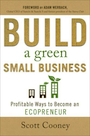
Or...talk with the author!
Click here to schedule an hour consultation.
 Green franchise opportunities:
Other green business ideas
Green franchise opportunities:
Other green business ideas
- Healthy Fast Food
- Farmer's Market
- Personal Trainer & Diet Planner
- Juice Bar and Smoothie Café
- Green Building Materials Store
- Permaculture and Urban Farming
- Edible and Organic Floristry
- Energy Efficiency Auditing
- Ecotourism and Sustainable Travel Planner
- Sustainable Coffee House
- Consignment Shop for Kids Clothing & Toys
- Natural Foods Co-op
- Sustainable Food Prep and Cooking Instruction
- Food Plant Nursery
- Mesh Network Telephone and Internet Company
- Drive-thru Coffee Stand & Espresso Shop
- Eco-Friendly House Cleaning Service
- Organic Backyard Garden Landscape Design
- Green Bed and Breakfast (B&B)
- Sustainable Mobile Food Vendor
- Biodiesel Cooperative
- Eco Friendly Pool and Spa Cleaning
- Green Wedding and Sustainable Event Planner
- Organic Farm
- Gift Basket Service
- Pedicab Company
- Used Books Vending Machines
- Organic Day Spa
- Restaurant Food Delivery Service
- Used Bicycle Retailer
- Landscape Maintenance in Arid climates
- Organic Food Delivery Service
- Outdoor Gear Consignment Shop
- Eco Concierge Service and Relocation Specialist
- Organic Community Supported Agriculture
- Sustainable Property Management
- Residential Solar

